
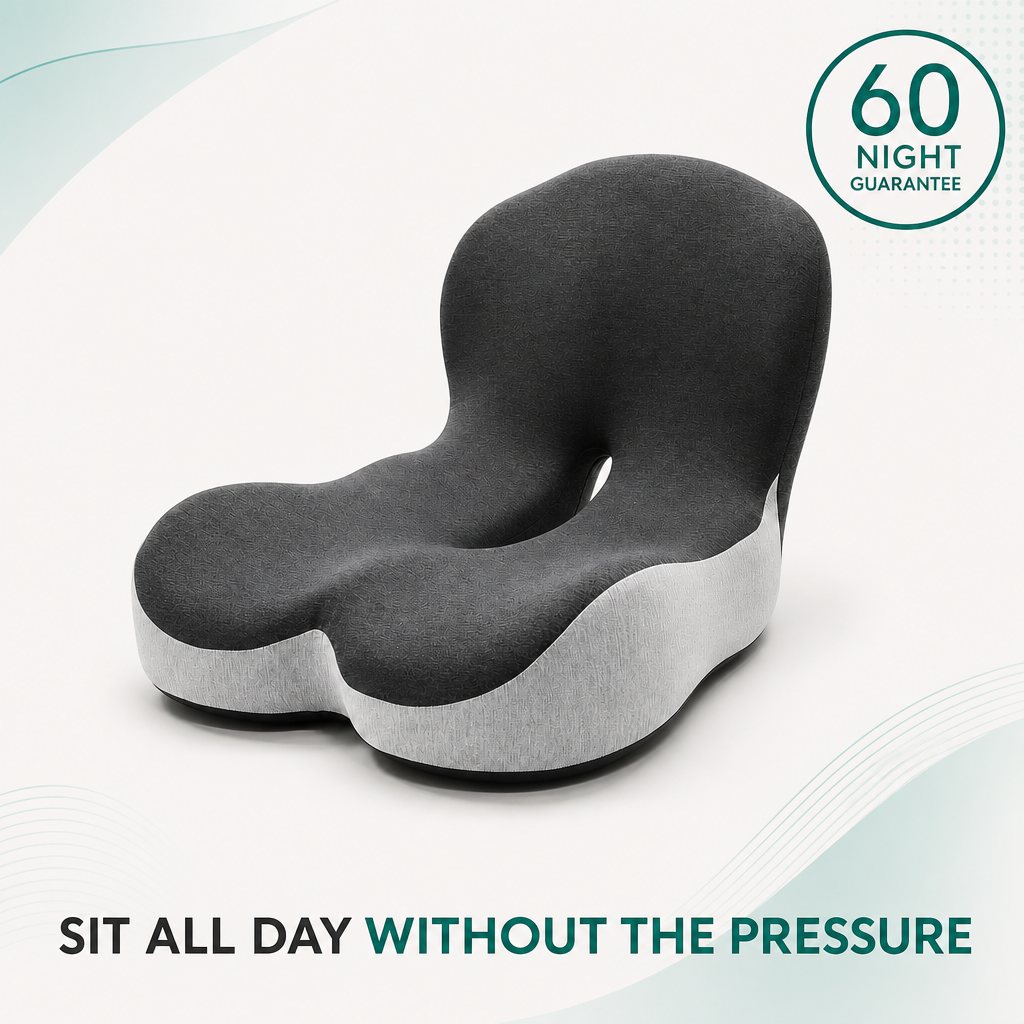
For when sitting down is the worst part of your day
Standing is fine. Lying down is fine. It's sitting that has become the thing you plan your day around — and Perch is the reason people stop planning. A full cutout means the sore spot carries none of your weight, so a chair stops being something you brace for.
- Sit through a whole meal again — the sore spot carries no weight at all
- Do the drive in one go — your load moves out onto the sit bones instead
- Still works this time next year — firm foam that won't flatten like a folded towel
- Take it to whichever chair is worst — dining chair, office chair, car seat or wheelchair
- Nobody has to know why you're sitting on it — plain charcoal, discreet packaging


Your whole bodyweight lands on one small spot
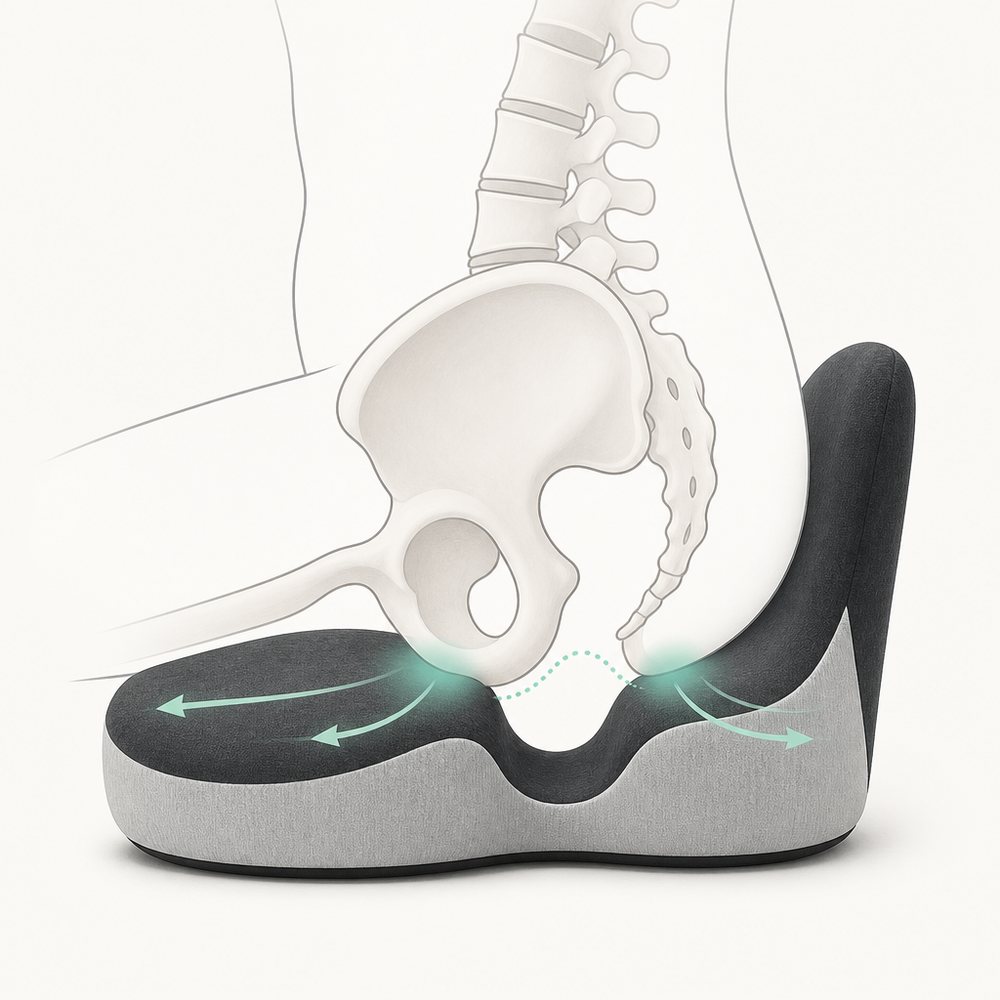
At the base of your spine is the coccyx. It has almost no muscle or fat over it, and it was never built to carry weight. On a flat chair it does exactly that — your pelvis rolls back, and everything above it presses down through the tailbone and the soft tissue either side of it.
That is why a haemorrhoid flare and a healing surgical site hurt in the same place and for the same reason. It isn't the chair being hard — it's where the load lands, and how long it stays there.
FloatCore™ doesn't cushion that spot. It removes it. The cutout means there is nothing underneath your tailbone at all, so the pressure never arrives, and your weight transfers out onto the sit bones — the two thick load-bearing bones your body actually sits on.
Sit through a whole meal again
A full cutout, not extra padding — the sore spot touches nothing, so there's no pressure to put up with.
Do the drive in one go
Your weight spreads sideways onto the sit bones, which are built to carry it, instead of onto the one place that can't.
Get up without bracing for it
The raised back edge tilts your pelvis forward a few degrees, so you stop rounding your lower back to stay upright.
Bought by people who've started planning their day around chairs
Standing is fine. Lying down is fine. It's sitting that's become the problem — and these are the reasons people tell us they ordered.

Haemorrhoids
A flare turns every hard chair into something you plan around. The cutout means the area takes no weight while you're sitting on it. Perch won't treat the condition — it takes the pressure off it.

After surgery or a procedure
The most common reason we get ordered. Standing is fine and lying down is fine; it's the chair that's become the problem for a few weeks.

A bruised or broken tailbone
One fall on a hard edge and every seat for the next three months reminds you about it. Coccyx injuries take months to settle.

Long hours you can't get out of
Long drives, long shifts, long flights and wheelchair use — anywhere you can't simply stand up when it starts.
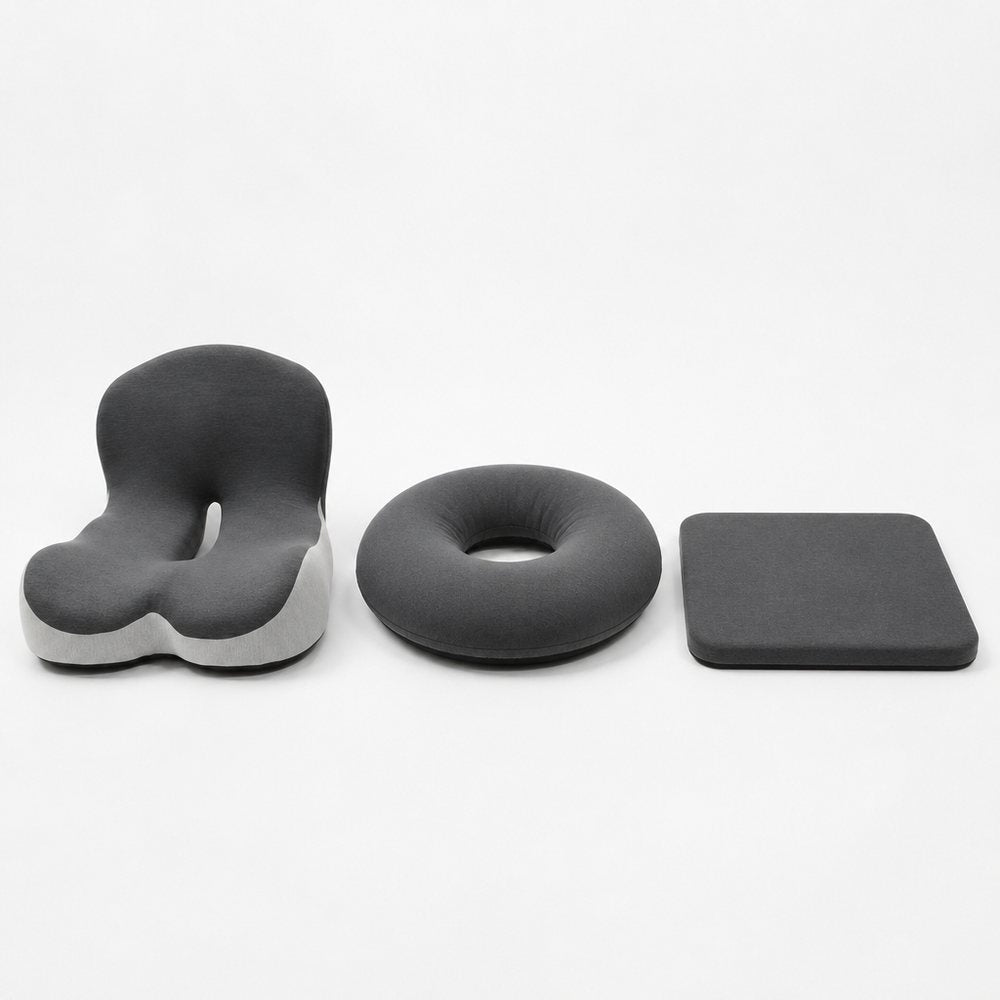
The donut ring works. It just announces itself.
An inflatable ring does take the pressure off — and everyone in the room knows why you're sitting on it. A flat foam pad doesn't lift the tailbone at all, and a folded towel flattens in twenty minutes. Perch is a plain charcoal seat cushion that nobody comments on.
| Perch | Donut ring | Flat foam pad | Folded towel | |
|---|---|---|---|---|
| Tailbone touches nothing | ✓ | ✓ | ✕ | ✕ |
| Doesn't look medical | ✓ | ✕ | ✓ | ✕ |
| Supports the lower back too | ✓ | ✕ | ✕ | ✕ |
| Still the same shape next year | ✓ | ✕ | ✕ | ✕ |
| Won't slide off the chair | ✓ | ✕ | ✕ | ✕ |
| Cover comes off and washes | ✓ | ✕ | ✕ | ✓ |
“I stopped timing how long I could sit for”

Six weeks after surgery I was still eating dinner standing up. First night with this I sat through a whole meal and didn't think about it once. That is the entire review.

I'd been sitting on a folded towel in the van for the better part of a year. Bought one for the van and one for home. The flare-ups still come but the driving part stopped being the thing I dreaded.

I was quietly avoiding the wooden chairs at my daughter's place. Took this over at Easter, sat through the whole lunch, and nobody said a word about it. That was the bit I was worried about.
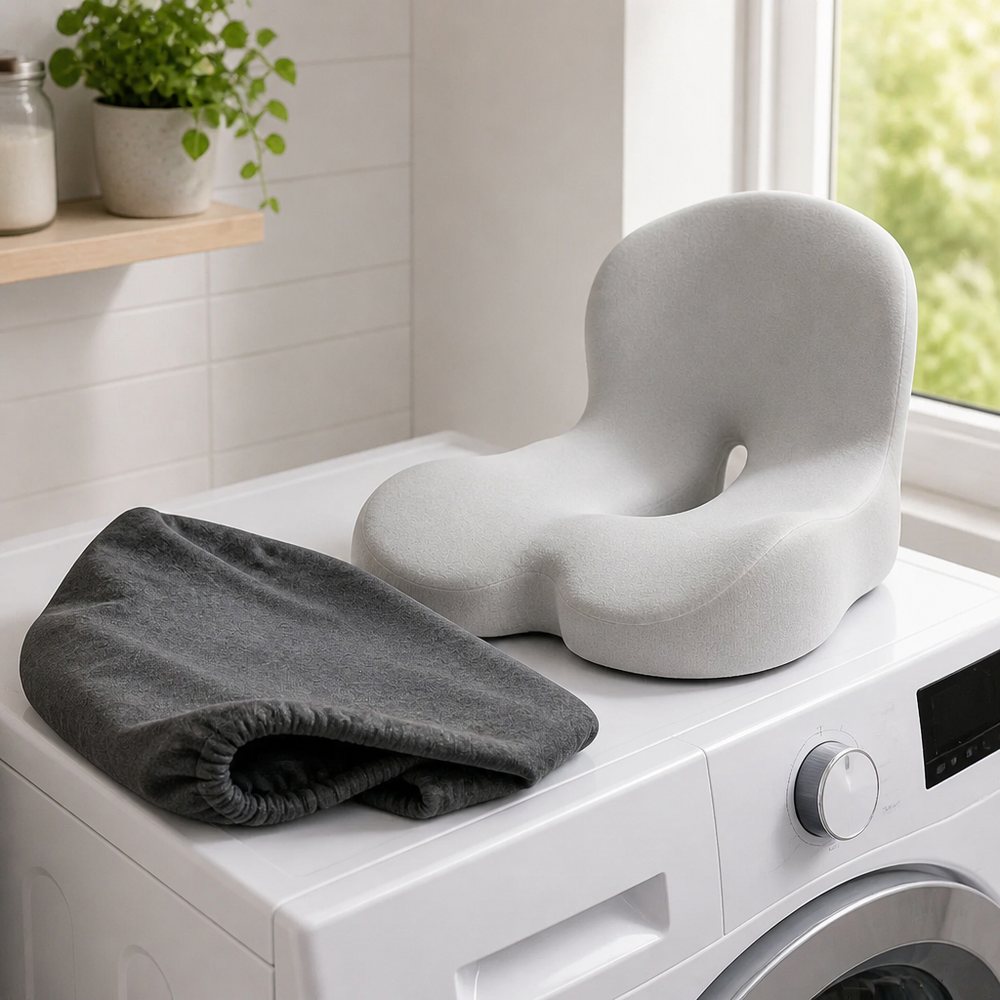
The cover comes off and goes in the machine
It matters more in this category than most. The charcoal stretch-knit cover unzips completely and washes cold; the foam core underneath stays put. The base is a grippy non-slip rubber, so it doesn't wander off a dining chair or slide around a car seat when you corner.
The foam is high-density and firm on purpose. Soft is the whole problem — you sink through it and land on the tailbone anyway.
It goes wherever the bad chair is
Most people order two. One lives on the chair at home, the other stays in the car — because the drive you've started breaking into two stops is usually what made you look for this.
Make sitting easier →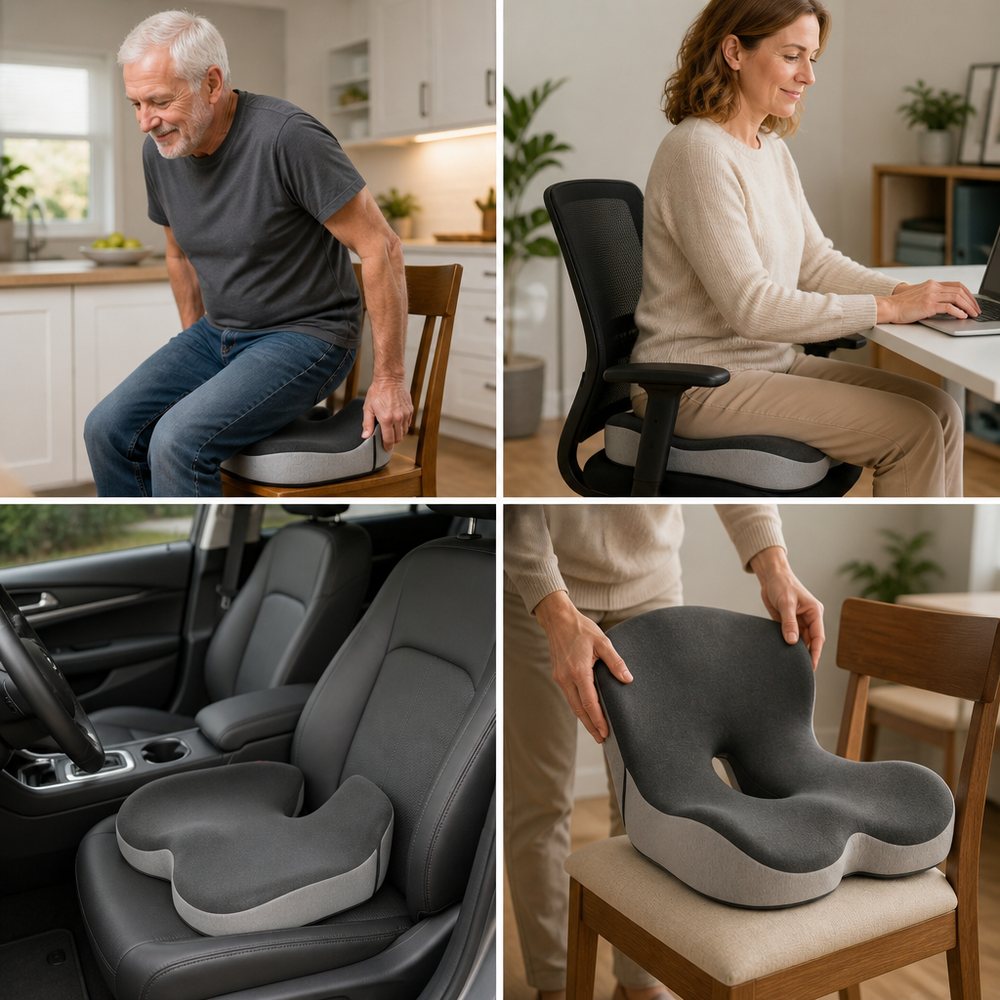
The questions we get most
Will it help with haemorrhoids?
It takes the pressure off the area while you're sitting, which is what most people are looking for. It is a cushion, not a treatment — it won't shrink or heal anything, and if symptoms are new or getting worse, see your doctor.
Can I use it after surgery?
Plenty of people do, and it's the most common reason we get ordered. But your surgeon knows your situation and we don't — ask them first.
Will it fit my chair?
17.3" wide × 16.5" deep. It fits most dining chairs, office chairs, car seats and wheelchairs. On a narrow bucket seat the wings sit up slightly, which most people find holds them more securely rather than less.
Is it firm or soft?
Firm, deliberately. Soft foam lets you sink until the tailbone lands anyway.
Does it look obviously medical?
No — plain charcoal, the sort of thing that lives on a desk chair without comment. That's the main reason people pick it over a donut ring.
What if it doesn't work for me?
Send it back within 60 nights and we refund you. You don't need to box it up neatly or explain yourself.
60 nights to decide
Use it at the desk, in the car, at the dinner table. If sitting isn't easier, tell us and we'll refund you. A cushion you don't want to sit on isn't worth keeping.
Perch is a seat cushion. It is not a medical device and is not intended to diagnose, treat, cure or prevent any condition. If sitting is painful, or symptoms are new, persistent or worsening, speak to your doctor — particularly after surgery, an injury or childbirth.